Saturday, May 23, 2015

Fruit Basket: A Gay Man's Journey


Fruit Basket
by
Payam Ghassemlou Ph.D.
People don't need to travel to exotic places to begin a process of self-reflection. Personal growth is accessible to anyone who is willing to embrace curiosity and engage in self-discovery. In this book, Fruit Basket, I share the psycho-spiritual journey of a gay man named Javid, in which he struggles with homophobia and having a life purpose. When Javid has his last struggle with vanity and begins to dance to a more meaningful tune, his life grows in favor of depth. 

This book is available on Amazon and Smashwords:

Createspace

I hope you enjoy reading it.


© Payam Ghassemlou, MFT, Ph.D., SEP, is a psychotherapist (www.DrPayam.com), Somatic Experiencing Practitioner (www.SomaticAliveness.com), writer (https://www.drpayam.com/articles_and_book) ,and artist

 
Licensed Marriage and Family Therapist online anywhere in CA & Florida.


Wednesday, March 25, 2015

Beyond the Circle of Our Everyday Life


Beyond the Circle of Our Everyday Life

By
Payam Ghassemlou, Ph.D.


As human beings, we need shelter, food, safety, emotional support, health care, human connection,and many other basics. In the circle of our everyday lives, we are busy taking care of these basic needs while accomplishing our life goals. Many years of our lives can be devoted to meeting goals like graduating from college, getting married, buying a house, rearing children, having a successful career, and staying healthy. The rest of our lives can be spent maintaining our achievements, building on them with more accomplishments, or coping with changes and unexpected losses that can happen to us.

This circle of everyday life, our daily routine, is the plane of existence that most people are familiar with. It is the outermost circle enclosing the inner circles in the continuity of existence. Many people, not awake to anything beyond day-to-day existence, can let life happen to them as if they are in a trance. To be in the trance is to live life in such a way that one is completely identified with her or his social role and status. This kind of over identification can prevent people from living an authentic life and going beyond the mundane.

Life in a trance gets shaken up when an unexpected loss happens. For example, a number of individuals who lost their high profile jobs in the recent US economic recession became seriously depressed. Since they completely relied on external circumstances like wealth, privilege, and class to define their personal identity, the humiliation of losing this status made them feel worthless.

During the same era, there were others who were gainfully employed but they felt discontented. People in this category believed they did not climb the success ladder high enough. They developed tolerance to the highs of external accomplishments and then needed more success to feel the same high. In addition, these people could not feel good about themselves when they compared their successes to others’ which seemed more impressive. Such comparing can cause self-imposed suffering. A whole lifetime can be spent on a roller coaster of feeling accomplished versus discontented on this plane of existence.

Luckily, we have other choices. Some of us are exploring another plane through a journey of self discovery. We can embark on this journey through deeper psychological and spiritual work, which will enable us to experience the numinous in everyday life and transform our suffering into the gold of consciousness. When we work on knowing ourselves and bringing this consciousness to our day-to-day living, we are transforming our lives.

One need not abandon the business of navigating the circle of everyday life in order to participate in the journey of self discovery, but we need to navigate with a quality of consciousness that not only helps to fulfill our responsibilities but also get closer to our “True Essence.” There is nothing wrong with making money and enjoying the fruits of our labors, as long as we are not doing it for the purpose of covering up our inferior feelings or falling into a trance of over identification with a certain status.

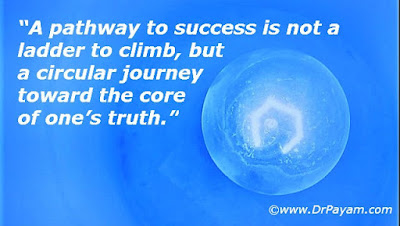
On the journey of self discovery, the progression into the core of the circle, our True Essence, is a circular motion, not a ladder. We go around and around the circle of existence, and we can get stuck in one track if we don’t do the inner work of understanding ourselves. It is like walking a labyrinth only a little way and staying on the periphery, not going to the middle to receive the spiritual and psychological gift given there. To move to the next track and journey toward the core of the circle, we must make a commitment to knowing ourselves. Each moment of growth and insight can help us journey closer. The more evolved we become the closer we are getting to the truth of who we really are.

Everyone can find her or his own unique approach to a meaningful existence. My initiation to this journey happened at a young age with the realization that I was different in being gay. My attempt to understand the meaning and purpose of my gayness pushed me out of the collective into a journey of self reflection and understanding myself. At the same time, this journey empowered me to stand up to homophobia. For others, this change can happen when they turn losses and tragedies into transcendent experiences and as a result become evolved human beings.

To know ourselves we need to encounter the unconscious. Having a guide in this process is essential. We need support in understanding what we might encounter. There are parts of us of which we are not completely conscious. We could think of them as layers of our personality that impact our interaction with ourselves and the world. How these layers impact us depends on our relationship with them. Progress toward our True Essence is difficult if we don’t have a conscious relationship with different parts of ourselves. Also, working with the unconscious is important because within our unconscious reside creative potentials and answers to many of our life mysteries.

Writing is one of the simple and yet valuable tools we can use for self discovery and to build relationships with different aspects of our personality. I find it very helpful to write in my journal about the way I handled certain life challenges without being hard on myself. Journaling helps me learn more about myself and become more aware. Also, journaling can be a place where we record our dreams. In working with our unconscious, we are helped by paying attention to the images that manifest in our dreams. By analyzing our dreams with the help of a trained person, we can learn about the content of our unconscious.

On our journey toward our True Essence, we need to develop a quality of attention that focuses on the present moment despite all the distractions. One way we develop such presence is by paying attention to our breathing. Awareness of breath is a simple practice that helps us to be in the moment and develop a deeper relationship with ourselves. We can also bring our awareness to the present moment by paying attention to our bodily sensations. For example, sitting on my office chair, I can notice the comfortable experience of having my back supported by the chair. Such a sensation of comfort can only be noticed in the present moment.

Reflecting on our life experiences and discovering their meaning not only gives our lives a sense of purpose, but also enriches our life journey. The journey of knowing oneself is a very personal experience for each traveler. The goal is to have an ongoing connection to our True Essence.

Arrival at such a connection is not the end of the journey. It can be a doorway to an even stronger, more conscious connection to something greater than ourselves. It can be imagined as a drop of water merging with a Divine Ocean where one can experience Oneness. Each traveler can experience her or his unique merger with the Divine Ocean of Oneness. There is no end to the journey of knowing oneself for the sake of union with a power greater than oneself. The path is infinite, and it starts with a willingness to wake up, depart from the outside periphery, and step inside.


For more articles by Dr. Payam, please click on the following link:  https://drpayam.com/articles_and_book


http://drpayam1.blogspot.com/2015/03/beyond-circle-of-our-everyday-life-by.html


© Payam Ghassemlou, MFT, Ph.D., SEP, is a psychotherapist (www.DrPayam.com), Somatic Experiencing Practitioner (www.SomaticAliveness.com), writer (https://www.drpayam.com/articles_and_book) ,and artist

 
Licensed Marriage and Family Therapist online anywhere in CA & Florida.


He is the author of Fruit Basket: A Gay Man’s Journey. In his book, Dr. Payam Ghassemlou writes about the psycho-spiritual journey of a gay man named Javid, in which he struggles with homophobia and having a life purpose. Available on Amazon


Sunday, June 22, 2014

A Gay Perspective on the Earth’s Lament


By


The gay community’s decades of activism fighting homophobia and dealing with HIV/ AIDS places them at a greater advantage for responding to the lament of the Earth over what is being done to her. Gay history is intertwined with standing up for causes that makes this world a better place. Many of us who survived the AIDS crisis along with the new generation of LGBTQ activists are now summoned to respond to our current collective challenges. As the ecosystem is being destroyed by greed and economic expansion, everyone has a responsibility to respond to the lament of the Earth. As the oceans get more polluted and rainforest more devastated, we need to ask ourselves, “What are we doing for the Earth?”

The current toxic political climate is a major contributing factor not only to the mistreatment of nature, but also to the psychological distress that many of us are experiencing. Therefore, we all need to participate in “loving the world back to health.” As Dr. King stated, “In the End, we will remember not the words of our enemies, but the silence of our friends.”

As a gay man and a psychotherapist who understands the importance of relationships, it saddens me to realize how disconnected humanity has become from nature and each other. Many people are so obsessed with the tools of new technology and social media that they have lost connection not only to their souls but also to the soul of the world (Anima Mundi). A human being is wired to make authentic connections, to be empathic, to live a meaningful life, to treat nature with respect, and to embrace his divine nature. When humanity acts against his or her nature or does not embrace what is real to be a human, all sorts of psychological distress unfolds.

Our current political structure that governs our lives endorses policies that are not congruent with humanity’s real nature. Such policies contribute  to the destruction of the ecosystem, creation of an inadequate health care system, disregarding human rights, using religion to oppress LGBTQ people, encouraging fulfillment through consumerism, and providing substantial tax cuts to the wealthiest individuals. Such a corrupt political structure makes it difficult for many of us to live our authentic nature, optimally thrive and causes psychological distress. In any society where people are conditioned to view getting ahead equals success while having no regard for those who fall behind is not going to be a healthy society. Humans are not wired to compete but to cooperate.


Given that mental health and sociopolitical factors are deeply intertwined, mental health providers need to consider the rise of addiction, depression, anxiety, and suicide in our current society not only rooted in the individual psyche but also the sociopolitical factors. There are many reasons why people cannot optimally thrive, and sociopolitical factors are one of them. 


Many LGBTQ people who participate in psychotherapy often feel ashamed for not being able to adjust to a dysfunctional and homophobic society and thinking there is something wrong with them for feeling anxious or depressed. Often the work in therapy is focused on understanding the negative impact of growing up in a dysfunctional family and not enough focus on the impact of living within a corrupt political structure. This does not mean psychotherapists need to turn the therapy session into a political discussion and impose their political views on their clients. Yet, therapists need to consider that people develop many psychological problems in societies where they are alienated from nature, each other, and themselves.

Many LGBTQ people know that the authoritarian dark forces aim to spread hatred and prejudice by absorbing the light of our democracy. They value economic expansion over saving our ecosystem. It is important to take responsibility and do our part to help. The remedy for our current collective challenges is to embrace the fundamentals of what it means to be a human being, and that is having empathy. When humanity abandons empathy, their relationship to nature, each other, and themselves suffer. LGBTQ people are at great advantage to help change the world by giving voice to the need for embracing love and empathy.

Given the essence of being gay is love, our activism starts by journeying into the sacred space in our hearts. Within our heart of hearts, there is a sacred place that homophobic dictators cannot touch. That is why despite all homophobic mistreatment many of us have experienced, we can still fall in love. Knowing that we have a heart along with the ability to embrace empathy can protect us from helplessness and becoming victims in our current political situation. As many Sufis and Buddhists stated, “compassion is action.” We need to go deeper and deeper into the heart and embrace love. The love for America coupled with our passion to care for Mother Earth vibrates above the forces of archetypal evil. Our compassion for the Earth and each other is a form of activism that lets our hearts be in service for humanity. We don’t clash with darkness. We simply let the power of love rise us above it. This is how we don’t get entangled in “good versus evil.”  This is how our activism creates a container for the arrival of a new archetypal energy that can change the world for the better.


For more articles by Dr. Payam, please click on the following link:  https://drpayam.com/articles_and_book


© Payam Ghassemlou, MFT, Ph.D., SEP, is a psychotherapist (www.DrPayam.com), Somatic Experiencing Practitioner (www.SomaticAliveness.com), writer (https://www.drpayam.com/articles_and_book) ,and artist

 
Licensed Marriage and Family Therapist online anywhere in CA & Florida.


Sunday, December 8, 2013

My Coming Out , A Journey Held by the Earth

By Payam Ghassemlou MFT, Ph.D.


There was a time I was struggling to make sense of being queer. I recall feeling shame for being different. It was a lonely and confusing period not being able to “act straight” and flow with the mainstream. At the time, I needed a refuge from my oppressive homophobic environment. Sometimes, I escaped into the safety of my imagination, and I saw myself as a river on a sacred land. As a river, I could move freely and flow into an ocean. The image of a flowing river felt liberating in my body, and it was a delightful contrast to feeling stuck in the closet of shame. I was too young to realize through such an image I was experiencing movement as an antidote to my oppression. I am grateful for the offerings of my imagination during such a painful period.

In my imagination, I often saw myself on a sacred ground. The concept of resorting to a sacred land was something I learned growing up. When faced with overwhelming feelings, some people in my family found peace by visiting sacred locations on the Earth. That is what my grandmother did. She traveled to Mecca after the loss of her husband to experience relief. The holy land made it easier for her to find solace. I thought about finding my version of a sacred land, a safe zone, free from judgment to locate my gay self and arrive at a place of self-acceptance.

The place that eventually offered me a refuge, and connection with other queer people was not in Mecca. It was a dance floor inside a gay bar. For an isolated gay youth starved for love and struggling to breath air that was not contaminated by homophobia, a  dance floor was his sacred site. I felt safe there. Living in a world that is tainted by racism, sexism, homophobia, transphobia, and xenophobia, any place that offers a sense of safety for marginalized people is sacred. In today’s perilous world, such a feeling  is sacrosanct. In June of 2016 when I heard about a mass shooting inside Pulse, a gay nightclub in Orlando, Florida, I felt devastated for those innocent queer souls who lost their lives. Perhaps many of them were there to find safety and connection just like I had done when I was in their age.

My coming out was not only an inner journey of embracing my gay essence, but also a journey that is held by the Earth. At the time, I did not have the understanding that the Earth held space for me to come out. All the resources that helped me make sense of being queer were located on the surface of the Earth. For example, a coming out group, a dance club, a psychotherapy office, a gay Pride Parade, the LGBT Center, and the local gay bookstore can all be considered sacred locations. Any location that one’s authentic self emerges becomes blessed with a powerful transformational energy. The Earth has been a host to countless, meaningful, and transformational experiences which has contributed to the sacred nature of the Earth.

The Earth needs to be included in my coming out story because I am never separate from her. In fact, my body is made up of elements that belongs to the Earth. Given the current consumeristic mentality and the ecological crisis, I welcome any opportunity to bring awareness to “the cry of the Earth.” We can no longer live life unconsciously, given how much we know about the state of the planet. It makes me feel sad to witness humanity replacing fish in the oceans with plastic, rivers with nuclear waste, forests with urban housing, clean air with pollution,  and turning the ecosystem into a garbage bin. As I painfully witness ecocide on Earth, I feel the urgency to respond to her cry.

My coming out story is part of the larger story of humanity’s movement toward love and liberation. We all want freedom to love. It hurts deeply to shame a human being for such a natural desire. Throughout human history and in most places on the Earth, countless numbers of innocent LGBT people have lost their lives through hateful acts; therefore, I consider the Earth as one giant shrine. The Earth has been witnessing humanity’s story, and I witness her mistreatment and exploitation of her natural resources.  

As a gay man, I honor my gay ancestors who had strong bonds with all life on Earth. As a LGBTQ community, I hope we relate to the Earth as our shaman ancestors did. Our survival depends on treating the planet as a sacred being in need of love. As the Earth’s holocaust is taking place, we as queer people can play a major role in stopping it. The LGBTQ community suffered their own version of a holocaust when the AIDS crisis took many lives of our people. Triumphs like the way we took care of our dying people during this crisis, and how far we have come in our struggle for equal rights are truly a reflection of how courageous we are as a community. Our courage can continue to stop forces of greed that are destroying our echo system. There's still time to love the Earth back to health.


© Payam Ghassemlou, MFT, Ph.D., SEP, is a psychotherapist (www.DrPayam.com), Somatic Experiencing Practitioner (www.SomaticAliveness.com), writer (https://www.drpayam.com/articles_and_book) ,and artist

 
Licensed Marriage and Family Therapist online anywhere in CA & Florida.


Sunday, November 24, 2013

A Brief Reflection on Climate Change


A Brief Reflection on Climate Change

https://www.drpayam.com/


More people are worried about climate change and its devastating impact on their lives than ever before. Many of us have seen the horrible images of weather-related catastrophes on the news. These images are sad to watch because they reflect how the mistreatment of the planet and exploitation of its natural resources has contributed to the problem of climate change. 


Many politicians and policy makers who don’t believe in the science of climate change often deny the fact that the greenhouse effect adds to the concentration of carbon dioxide in the Earth's atmosphere, and this is one the major reasons why we are experiencing more weather-related problems. We are being warned by many scientists that life as we know it today is changing. Our ecosystem is being ruined by oil spills, pollution, resource exploitation, and other destructive acts. With our ecosystem in crisis, we need to put the “planet before profit.” Those of us who hear the cry of the Earth cannot ignore the pain that has been inflicted on the planet by greed driven consumerism. Since not enough is being done to protect the planet from exploitation, we all need to get ready for an unknown future.    

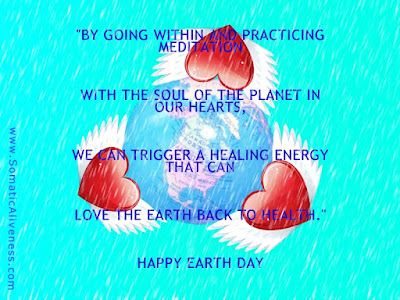
No one can predict with certainty what ten years from now is going to look like. There are scientists who believe we are passed the tipping point. Those of us who love and respect the Earth and witness its torment can no longer count on politicians to save our ecosystem or prevent further environmental damage. Humanity cannot solve this problem with the same consciousness that created it. It is time to embrace a new way of dealing with climate change that involves relating to the Earth as a living being with a soul. The Earth is alive and in need of love. We can love the Earth by keeping it in our hearts during meditation. By going within and practicing meditation with the soul of the planet in our hearts, we can trigger a healing energy that can love the Earth back to health.


We need to look deep within our own hearts and look for a new light that can guide us out of the impending doom of climate change. In such a hopeless situation we need to ask for a miracle and open our hearts to a power beyond our ordinary consciousness. 


Here is the link to Love the Earth Meditation:

© Payam Ghassemlou, MFT, Ph.D., SEP, is a psychotherapist (www.DrPayam.com), Somatic Experiencing Practitioner (www.SomaticAliveness.com), writer (https://www.drpayam.com/articles_and_book) ,and artist

 
Licensed Marriage and Family Therapist online anywhere in CA & Florida.


https://www.drpayam.com/

Sunday, October 28, 2012

Invisible Wounds


By


Many people carry invisible wounds that, when untreated, can impact the quality of their lives. Invisible wounds are often the result of betrayal, abandonment, neglect, and trauma that many people go through. This is different from usual disappointments when life doesn’t go our way or when dealing with the general stressors of life. Invisible wounds often come from victimizing life experiences or painful losses. They can result from the loss of important relationships or situations that fall outside of the acceptable norm of how a human being deserves to be treated. Being a victim of a crime, rape, incest, loss of a loved one, being bullied, domestic violence, painful break ups, extreme financial problems, political oppression, war, and devastations from climate change are examples of situations that can leave invisible emotional scars on people’s psyche.


People who are carrying invisible wounds might complain about one or more of the following: isolation, unhappiness, not feeling motivated, insecurities, low energy, disorganization, frustration, lack of interest in most things, irritation, sleeping disorders, feelings of emptiness, fear, panic, rage, and suicidal thoughts. These are often symptoms of untreated emotional wounds.


Numbing is often how people escape the pain of their invisible wounds. Distraction from emotional pain through numbing one’s self does not help with the healing of invisible wounds. Numbing can include being a workaholic, over eating, alcoholism, using illegal drugs, compulsive sex, watching too much pornography, overspending, and gambling. These unhealthy behaviors that many people use to numb themselves become additional wounds. The vicious cycle of having unhealed wounds and using unhealthy coping mechanisms to deal with one’s wounds cause more suffering and probability of more acting out behaviors to cope. This cycle is the enemy, and the way out is to go within.


Having invisible wounds can impact how people value themselves and affect their self-esteem. In the shadow of low self esteem, people can make negative life choices and refrain from living a productive life. Just like an untreated physical scar can turn into a serious infection, an untreated psychological wound can also create a painful mess in people’s lives. Ignoring one’s pain is never a good idea. Working on issues that has left painful traces is essential and can lead to a better life.


Everyone’s pain is unique, and no one deserves to suffer in silence. Reaching out and asking for help is a courageous act that people can do in response to their emotional pain. Often, invisible wounds can become conscious by paying attention to our painful feelings and our dark thoughts. By going within and feeling our feelings, we can get to the center of our wounds. Once there, we need a caring listener to hear the story behind the wound and provide us empathy. Being heard and receiving empathy is an important part of the healing process. Having support in understanding our emotional pain is important too.


We can also turn to a journal and write about our pain. Writing about our painful experiences and making emotional discoveries about them is a powerful healing tool. This work needs to be done in the context of psychotherapy and with the support of a trained mental health therapist. Counseling can help people learn how to contain and work with their raw emotions in order to avoid getting overwhelmed by them. It helps people transform these intense emotions to new emotions that are not associated with their unresolved issues and wounds. Counseling can also   lead to a more rational thought pattern and change dysfunctional thinking.


People who I have helped grow and heal from their invisible wounds, often share with me a renewed sense of self and feelings of aliveness.  Participating in counseling with a seasoned licensed mental health professional that you feel comfortable with can be a good start for your healing process.


For more articles by Dr. Payam, please click on the following link:  https://drpayam.com/articles_and_book


http://drpayam1.blogspot.com/2012/10/invisible-wounds-by-payam-ghassemlou.html


© Payam Ghassemlou, MFT, Ph.D., SEP, is a psychotherapist (www.DrPayam.com), Somatic Experiencing Practitioner (www.SomaticAliveness.com), writer (https://www.drpayam.com/articles_and_book) ,and artist

 
Licensed Marriage and Family Therapist online anywhere in CA & Florida.


He is the author of Fruit Basket: A Gay Man’s Journey. In his book, Dr. Payam Ghassemlou writes about the psycho-spiritual journey of a gay man named Javid, in which he struggles with homophobia and having a life purpose. Available on Amazon


Saturday, May 26, 2012

Mindfulness for LGBTQ People


Mindfulness for LGBTQ People

By Payam Ghassemlou MFT, Ph.D.


Research has brought to our attention the impact of early life experiences on the development of the brain. What occurred in the past can condition our brain to have certain expectations about the future. This can raise concern for many LGBTQ+ people with a history of homophobic or transphobic mistreatment such as being called derogatory names, being bullied, and becoming subject to physical violence. 


Gay youngsters often spend many years of their childhood in a state of hyper-vigilance in order to be ready for possible homophobic attacks. Spending many years of not knowing what is around the corner can condition the brain to be in a constant state of over reactivity and might cause severe anxiety. It can also condition many gay people to relate to the future with a sense of threat instead of optimism.


As LGBTQ people, we need to have empathy toward our painful experiences and work on healing from our past mistreatment. In addition to psychotherapy, mindfulness practices can help us stop living life based on our past conditioning. For LGBTQ people who grew up mistreated and had to rely on hyper-vigilance as a survival skill, mindfulness can help them be in the moment without getting lost in catastrophic thinking. This also applies to anyone who is a survivor of any kind of past traumas and needs to shift to a more balanced state of the mind.


Regardless of our past experiences, mindfulness is useful for anyone who desires to be fully engaged with the present moment. In this brief article, I attempt to explore mindfulness and its benefits. My understanding of mindfulness is based on my training at the UCLA Mindfulness Awareness Research Center (http://marc.ucla.edu/), studying literature, and many years of my own mindfulness practices.

In the 1960s, Thich Nhat Hanh brought mindfulness to the attention of Westerners. Later in 1979, Dr. Jon Kabat-Zinn founded the Mindfulness-Based Stress Reduction program at the University of Massachusetts to treat the chronically ill. A variety of mindfulness practices exist today and much of it was inspired by teachings from the East. 


For the most part, mindfulness involves bringing our complete attention to our present experience on a moment-to-moment basis with acceptance and compassion. In particular, we can observe our physical, emotional, and mental experiences with kindness. We pay attention to whatever is happening in the moment, and we can use our sensory awareness to stay fully present. For example, when we wash the dishes, we can see and feel the soapy water on our hands. Also, paying attention to the sensation of water on our body during a shower, and noticing the taste of our food when we eat are examples of being mindfully present. 


When we practice mindfulness, we don’t get lost in either the memories of the past or the fantasies of the future.  Attending to the sensations of the moment helps us not feel overwhelmed or get lost in catastrophic thinking. We can cope with overwhelming emotions by focusing on external sensations such as hearing the sound of our shoes making contact to the ground while we walk.  This way, we ground ourselves in the reality of the moment which improves our capacity to tolerate difficult emotions.


Often our minds can wander away during the practice of paying attention to the present moment. We don’t need to judge ourselves when that happens. Instead, we can gently bring our awareness back to whatever we were focusing. We can also choose something new to notice in the present moment, such as a particular sound or sensation in the body. With practice, this non-judgmental awareness of the present moment can be a peaceful way of living.


Paying attention to our breathing is one more way to be with the present moment. Awareness of breathing is the most accessible path to the present moment. Over time, this practice can help us improve our ability to be in the moment. Each breath combined with acceptance of our moment-to-moment experience can allow us to experience serenity.


Mindfulness can help us regulate our attention and observe our mental activities with consciousness. We bring conscious awareness to our current thinking, feelings, and sensory experiences. For example, we can label our thoughts as we mindfully notice things like “planning” or “remembering.” We can also label whatever emotions we are experiencing in the moment by labeling them as “feeling anxious” or “feeling calm.” In addition, witnessing our bodily sensations such as numbness, pain or tingling with an attitude of curiosity instead of judgment can deepen our connection to our body.

Showing curiosity toward our surroundings is another path toward the present moment and can help us notice and engage with life in a new way. The greater awareness that we bring to our current life, the more we can be part of life. 


Finally, the practice of mindfulness can be enriching for anyone, including LGBTQ people, in order to live a more present-centered life. This state of active, open attention to our present moment can help us awaken to our life experiences instead of letting life pass us by. Mindfulness can help us avoid living a life based on multi-tasking and maintain our connection with the present moment. To learn more about mindfulness, you can read Fully Present, The Science, Art, and Practice of Mindfulness by Susan L. Smalley Ph.D. and Diana Winston. 


© Payam Ghassemlou, MFT, Ph.D., SEP, is a psychotherapist (www.DrPayam.com), Somatic Experiencing Practitioner (www.SomaticAliveness.com), writer (https://www.drpayam.com/articles_and_book) ,and artist

 
Licensed Marriage and Family Therapist online anywhere in CA & Florida.